Children at Risk in Thulani Snake Park’s Toxic Evaporation Ponds
Thokozile Mntambo
Despite promises of environmental responsibility, Pan African Resources has failed to secure the Vlakfontein tailing mine dump, leaving local children exposed to life-threatening hazards.
Pan African Resources took ownership of the tailing dump, inheriting the responsibility to ensure safety measures were in place. To gain community trust, they donated to a home for children with disabilities and held a public participation meeting to discuss the dangers of the tailing. Following this engagement, signposts were erected, and surveillance was promised. However, the most critical safety measures fencing and security remain absent.
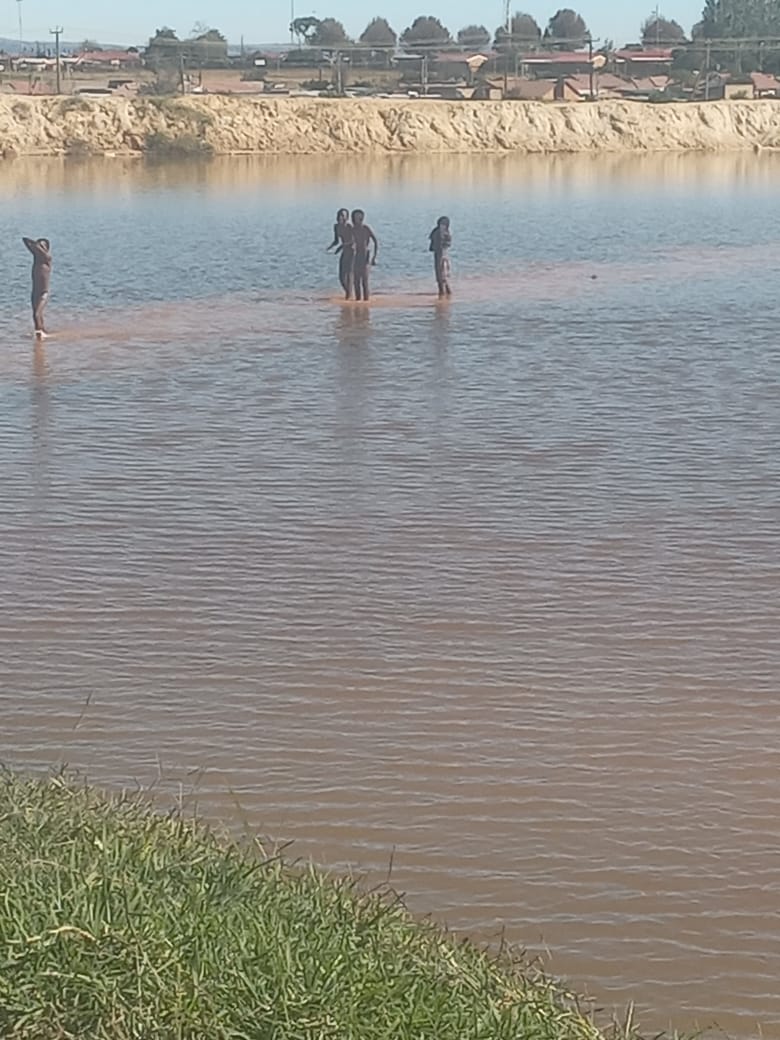
During school holidays, children are seen climbing the tailings and diving into the toxic evaporation ponds, unaware of the life-threatening risks. The absence of fencing and security has turned the area into an unregulated playground, exposing them to contaminated water and hazardous materials
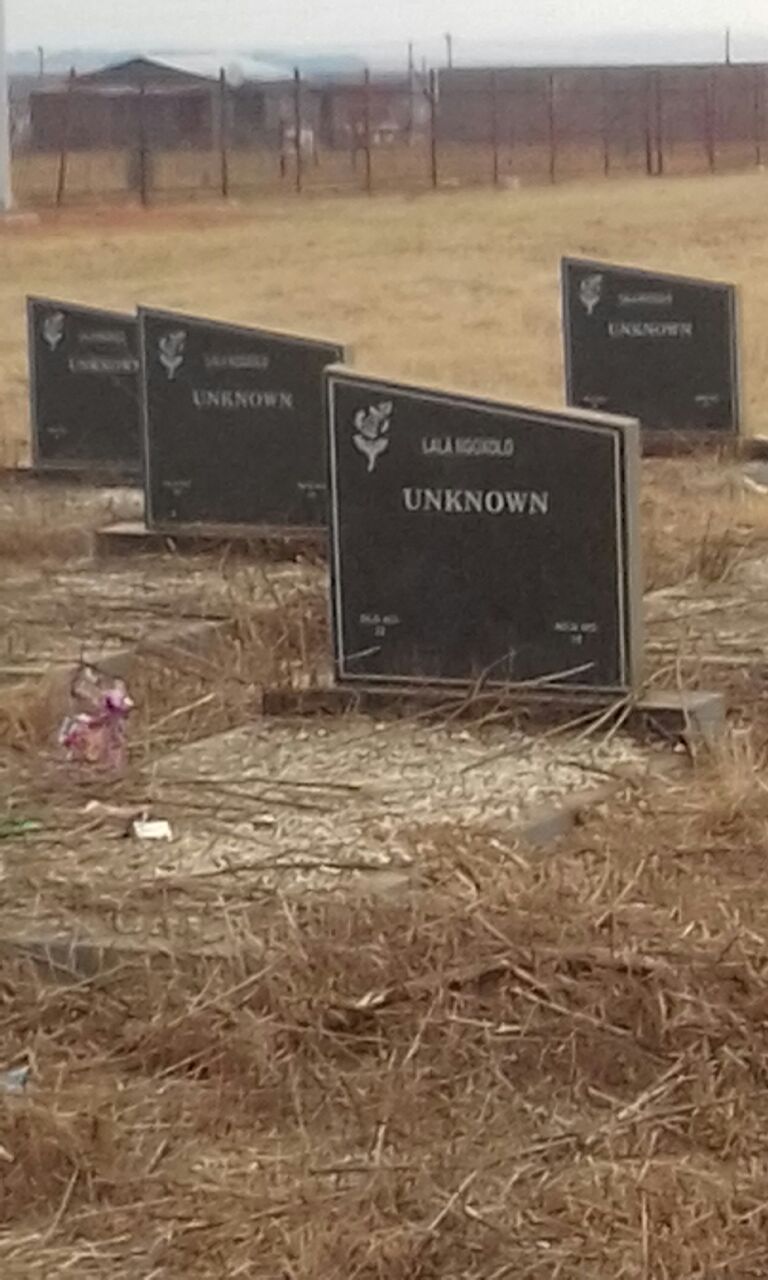
Local farmer Mr. Mbuyiseni, who runs a pig farm next to the tailings, has repeatedly warned children to stay away from the dump. “It’s not safe, and they might even die,” he says, recalling past tragedies. There have been cases of children who lost their lives in the tailings due to quicksand, yet no preventative measures have been put in place.
Similarly, Katiso Gobizebe, a single father of four, has tried countless times to warn his children about the dangers of tailings. Since the passing of their mother four years ago, he has had to leave them unattended on weekends while he hustles to provide for them. Without fencing or security, his children like many others continue to play on the toxic site, putting their lives at risk.
On January 31, Pan African Resources hosted a follow-up visit from the Church of England Pensions Board, other investment partners, and environmental activist Mariette Liefferink, to assess improvements on the site. While these engagements are meant to demonstrate corporate responsibility, many residents question whether these meetings translate into real action.
Despite previous discussions and promises of enhanced surveillance, children are still at risk, and the promised fencing remains absent. The community, which has witnessed the tragic consequences of corporate negligence, is growing frustrated with symbolic gestures that fail to address the immediate threats they face.
The Snake Park Bambanani Co-operative, led by local environmental activist Bongani Dladla, has been tirelessly monitoring the tailing dump, conducting phytoremediation, and studying the health impacts on the community. Phytoremediation is the solution for our marginalized economy in Snake Park – Tunatazama – Community Monitors.
Phytoremediation is a scientifically proven, plant-based technology that helps remediate toxic soil by using plants to absorb, stabilize, or break down pollutants.
- Sunflowers extract heavy metals like lead, arsenic, and uranium from the soil, making them effective detoxifiers.
- Bamboo absorbs harmful organic compounds while stabilizing soil erosion, preventing contamination spread.
- Cannabis has shown potential in absorbing radiation and heavy metals, contributing to the rehabilitation of polluted land.
These plants naturally remediate the land, offering a cost-effective and sustainable alternative to expensive mechanical cleanup methods. Yet, despite these community-led efforts, Pan African Resources has failed to engage local environmental experts, ignoring practical solutions that could restore the land.
Mining accountability remains weak due to gaps in South Africa’s regulatory framework, particularly within:
- The National Environmental Management Act (NEMA)
- The Mineral and Petroleum Resources Development Act (MPRDA)
Both laws fail to enforce strict mine closure regulations, allowing mining companies to go into liquidation and abandon tailing dumps without proper rehabilitation. As a result, local communities continue to suffer from environmental degradation while corporations evade responsibility. Management Gaps in the Implementation of Legislation Regulating Derelict and Ownerless Mines in South Africa.
The Stilfontein massacre, where ex-miners were killed while extracting gold, demonstrates that the legacy of mining exploitation continues to harm vulnerable communities. The state of mine closure in South Africa – what the numbers say.
To prevent further tragedies, urgent legislative reforms are needed to: Mandate full rehabilitation before mine closure, preventing abandonment of hazardous sites. Ensure financial provisions for post-mining environmental restoration, holding companies accountable. * Increase enforcement mechanisms, so regulatory bodies can intervene before sites are left dangerous.
Mining companies must hire local workers to implement safety measures, including:
- Installing fencing and security to safeguard tailings.
- Training residents in environmental restoration and mining safety for long-term rehabilitation projects.
By providing jobs, companies can support the community economically while ensuring the tailing dump is properly secured.
The community demands immediate intervention. Pan African Resources must:
- Install fencing and security, prioritizing local employment.
- Collaborate with environmental experts and activists to implement phytoremediation.
- Participate in legislative reform efforts to close loopholes that allow mine abandonment.
- Hold investment partners accountable for ensuring safety measures are enforced.
South Africa’s mining legacy cannot continue to devastate communities without consequences. It’s time for corporate accountability, legislative action, and community-driven solutions to prevent further loss and ensure environmental Justice.