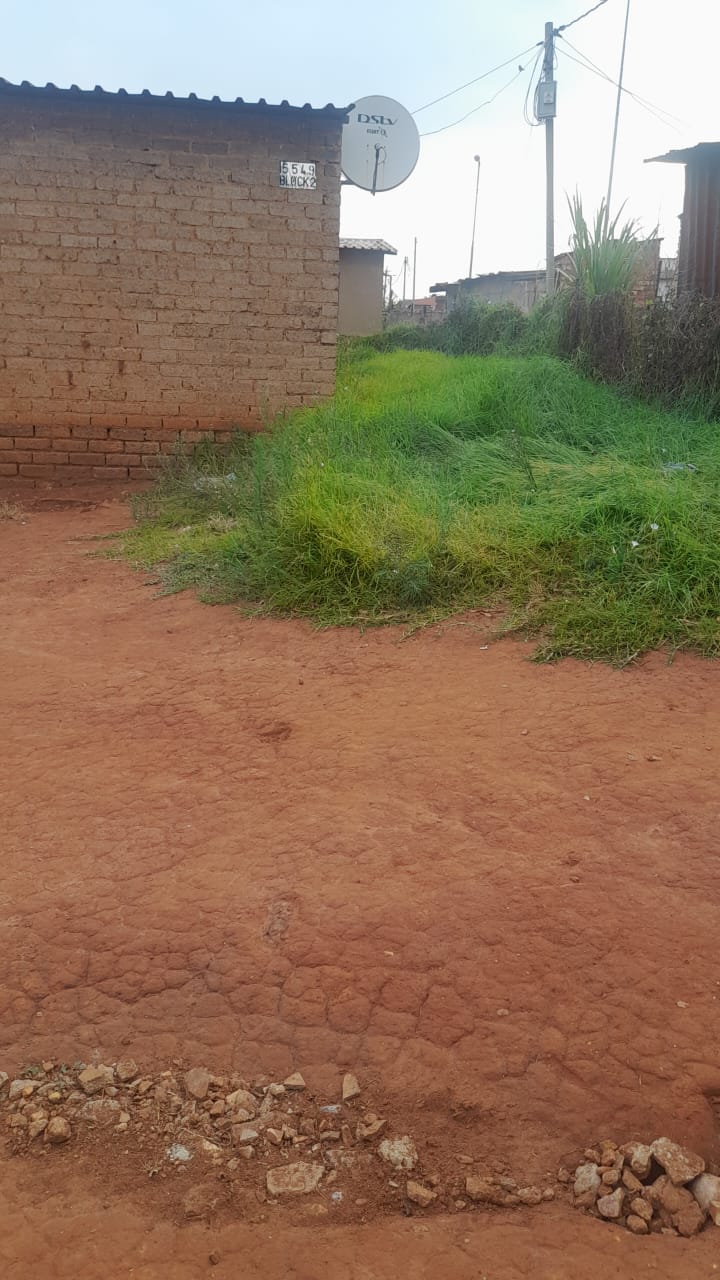
The houses that are vandalized and have no owners are the trapped houses.
Kefilwe Sebogodi
Many houses are empty, with no one living inside. In some cases, parents have passed away, leaving their children or grandchildren behind. These young people often resort to smoking dangerous substances in their houses with their friends. When they cannot afford drugs, they may start stealing items from inside and outside the house to sell to scrap yards, seeking funds for cigarettes, dagga (marijuana), and other drugs.
Unemployment has placed a significant amount of stress on these children, particularly boys and men, as they feel pressure to act as the breadwinners for their families. One example is a 25-year-old boy named Mxolisi. He shared that after losing his parents, he was responsible for taking care of his two siblings. However, without a job, he felt he could not cope, which led him to use drugs and vandalize the house to obtain more substances. His siblings were eventually taken by social workers, as their extended family was too far away. Mxolisi said they are now in safer hands than with him.
In house number 1770, Ext 10, there is a lot of stolen property stored inside, waiting to be sold at scrap yards or to community members. Many crimes occur within the vandalized or abandoned houses. Items such as taps, crates, pots, car parts, and even tires are among the stolen goods. The conditions inside these houses are dismal, as the residents do not bathe or clean, leaving the environment filthy and foul-smelling.
Additionally, there are frequent reports of girls being kidnapped, raped, and abused inside these empty houses. I spoke with a neighbor, Ms. Pitsa, a 60-year-old woman, who expressed her distress about the situation. She remembers the families who once lived there as good people who respected everyone and were active in their church. Now, she lamented, their children live like animals, and the community is exhausted by the ongoing crime. Although they report matters to the police, the SAPS seem afraid to confront these youths. Ms. Pitsa believes that, as concerned residents, we can do better in our community.
The Community Policing Forum, along with street committees and patrollers, works together to combat crime in the area. They have designated a day each month for community members to conduct stop-and-search operations in these troubled houses, confiscating dangerous items like knives, dagga, and nyaope. If community members engage in cleaning campaigns and take ownership of these abandoned houses, especially those with no known owners or family, perhaps the state could authorize organizations to turn them into useful spaces, such as offices or community centers, especially given the land challenges residents face.
By improving the condition of these properties and yards, we can create a safer environment and potentially provide jobs for unemployed individuals in the community. Safety must come first, and a collective effort can lead to positive change for everyone involved.