The unfulfilled promises of SLP need mining hosting communities to fight for their right
Thabang Thembani
BY: Thabang Thembani
In the dusty township of Nyakallong, where the sun beats relentlessly, and the air is thick with the residue of gold, a sense of disillusionment settles over the community. For years, the local mine has extracted precious resources, generated revenue and employment opportunities, but it is leaving behind a trail of environmental degradation, social disruption, and economic marginalization. Amidst this fraught landscape, Social Labor Plans (SLPs) emerge as a beacon of hope, promising to redress historical injustices and ensure that Nyakallong residents reap tangible benefits from the riches beneath their feet.
The story of Nyakallong is one of dashed expectations and broken promises. The mine, once hailed as a catalyst for development, has instead exacerbated existing inequalities, with many community members struggling to access basic services like clean water, sanitation, and electricity. Yet, the SLP, mandated by the Mining Charter, holds the promise of transformation. It outlines specific commitments, investments, and initiatives aimed at fostering employment and skills development, supporting local procurement and enterprise development, and driving community development projects.
But for Nyakallong residents, the SLP has been a slow-burning disappointment. Despite the mine’s promises, community members have been excluded from decision-making processes, and benefits have been slow to materialize. The local schools remain under-resourced, the clinic is in disrepair, and job opportunities are scarce. The sense of disillusionment is palpable, with many feeling that the mine is more interested in ticking boxes than genuinely engaging with the community.
Kobi Mokobori, Coordinator for Mining-Affected Communities United in Action (MACUA) – Allanridge Branch, sums up the community’s frustration: “The communities of Nyakallong are carrying the mining economy on their back, yet they’re not benefiting from it. We need to ensure that their voices are heard and their rights are respected.”
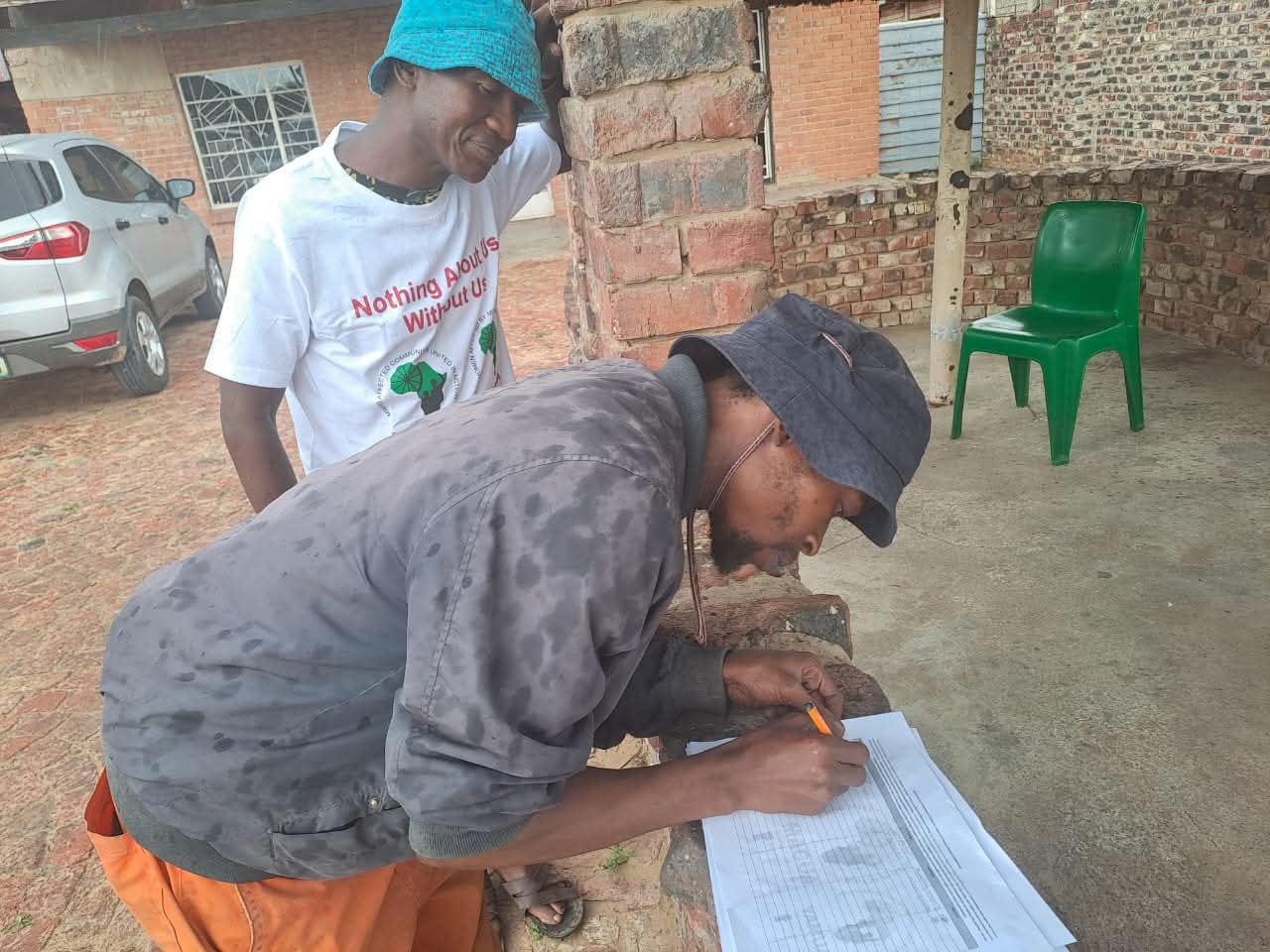
The 100,000 signatures collected by MACUA aim to pressure mines and the Mineral and Petroleum Resources Development Act (MPRDA) to prioritize community involvement and benefits. The petition, which has now been filed, seeks to address the mine’s failure to deliver on its SLP commitments and to push for greater transparency and accountability in the mining industry. Specifically, it calls for the mine to provide meaningful employment and skills development opportunities for local community members, invest in community development projects, ensure environmental rehabilitation and sustainable practices, and engage in transparent and inclusive decision-making processes with the community.
Kobi Mokobori says, “After we fill the petition, we will submit it to the Minister of Mineral Resources and Energy, and we will demand a meeting with the mine management to discuss our concerns. We will also engage with other stakeholders, including government officials, civil society organizations, and traditional leaders, to garner support for our cause. If the mine fails to respond positively, we will explore all available avenues, including litigation, to ensure that the community’s rights are protected and the mine is held accountable for its obligations.”
The community is determined to hold the mine and government accountable for their obligations and to ensure that the people of Nyakallong benefit from the mining activities in their backyard.
The system of capitalism, which prioritizes profit over people, often perpetuates inequality and exploitation. The mine’s primary objective is to maximize profits for its shareholders, often at the expense of the community’s well-being. This is evident in the mine’s reluctance to invest in community development projects, citing concerns about costs and profitability.
If the mine cannot fulfill its SLP promises, it risks leaving behind a legacy of poverty, environmental degradation, and social injustice. The community will be left to deal with the devastating consequences of mining, including polluted water sources, degraded land, and a lack of economic opportunities.
As the sun sets over Nyakallong, the community’s future hangs in the balance. Will they continue to be relegated to the periphery, or will they emerge as partners in shaping their own destinies? The answer lies in unlocking the potential of the SLP, rewriting the narrative of exploitation, and forging a new path – one of partnership, empowerment, and shared prosperity.